Defense | LIFT Aircraft

Defense

Built for the last tactical mile.

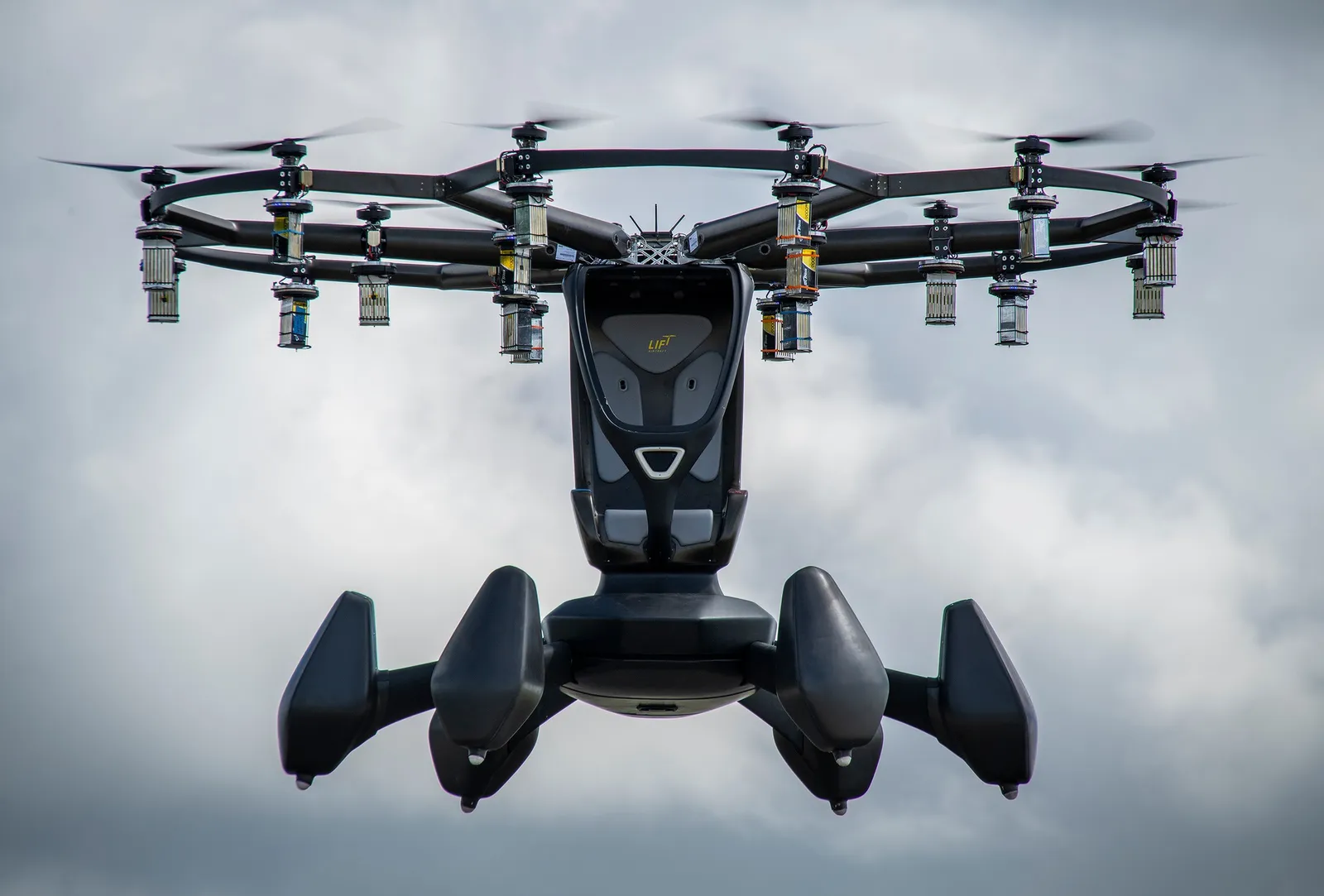
HEXA is a modular, optionally piloted VTOL for casualty evacuation, resupply and insertion. Flown with a pilot, remotely or autonomously, and tested with the U.S. Air Force and Army.

200+USAF flight test sorties with the 413th Flight Test Squadron, Eglin’s rotary-wing testers
7Department of Defense contracts, with the Air Force and Army
400 lbpayload uncrewed, a DoD Group 3 heavy-lift drone
18independent motors and batteries; it flies with up to 6 out
10,000+flights, with a perfect safety record

Featured by the Air Force

It starts here

HEXA appears in the U.S. Air Force’s “It Starts Here – Future” campaign film.

“The ability to fly into an area with a very small footprint, with a very small radar cross section, into an area where we would not want to fly manned aircraft. It’s another tool in the toolkit of things that we could do on the battlefield.”

Missions

Where helicopters can’t go, and small drones can’t carry

Helicopters are scarce, loud and high-value targets near the line. Small drones can see but can’t move a casualty or a real load. HEXA works at the point of need.

  1. 01Casualty evacuationMove a casualty from the point of injury to care within the golden hour, without committing a MEDEVAC helicopter.
  2. 02Blood and resupplyDeliver up to 400 lb of blood, medical supplies, ammunition or batteries, setting palletized loads down without a forklift or ground crew.
  3. 03Insertion and extractionInsert, extract or recover a single operator from sites where a helicopter is too large, loud or exposed.
  4. 04Ship-to-shoreMove pallets and people from vessels to the beach or between ships, with no port, crane or landing craft.
  5. 05Austere sitesOperate with a small footprint, a low acoustic signature and minimal crew training.
  6. 06With drone overwatchSmall drones clear and survey the landing zone and escort HEXA; HEXA carries the casualty or the load.

One airframe

Swap the mission, not the aircraft

HEXA flies with a pilot, remotely by trained operators, or autonomously, with obstacle avoidance and safe-landing-zone selection. Mission modules swap on the same airframe.

Animation. HEXA lands over the medical pod, locks it in and lifts off, with no ground crew.
Autonomous hoist: HEXA’s marker-recognition camera finds a marked package and winches it up. HexaCRANE flight test, 2023.
  1. 01Crewed cockpitOne person, up to 250 lb, with under an hour of pilot training.
  2. 02Pallet cargo module400 lb. Lands over a pallet and lifts it: a flying forklift with a range of miles. Flown for the Air Force.
  3. 03Autonomous hoistFinds a marked package, hoists it from an 8 m hover and delivers it, autonomously.
  4. 04Medical podTakes a standard Army litter or about 120 units of blood in climate-controlled boxes, and relays vitals and temperatures in real time.

Why HEXA

Optimized for hover, not transit

Casualty evacuation, resupply and hoist work are short legs spent mostly hovering and maneuvering in tight landing zones. Wings and helicopters move people and supplies to the edge; HEXA works there.

  1. 01Efficient in the hover18 large rotors give a disk loading of about 4 lb/ft², less than half a Black Hawk’s, so it needs less power per pound to hover.
  2. 02Fits a tight landing zoneA 15 × 15 ft footprint, straight up and down, with no transition corridor.
  3. 03Damage tolerantNo single engine, gearbox, tail rotor or fuel tank to hit. A hit costs one channel of 18, not the aircraft.
  4. 04Real payload fractionUp to about 49% of gross weight as payload: 400 lb at 820 lb.

Built to manned-aviation standards

A crewed aircraft first

Most cargo drones are built to commercial-drone standards. HEXA was designed, built and tested as a crewed aircraft, and every uncrewed configuration inherits that safety architecture.

  1. 01Redundant flight controlA Veronte Autopilot 4x variant co-developed with Embention: three cores plus a dissimilar arbiter, on a platform with DO-178C / DO-254 DAL B evidence.
  2. 02Ballistic parachuteDeploys autonomously on unrecoverable loss of control, effective from 40 ft.
  3. 03Military airworthinessAir Force military airworthiness approval under Agility Prime.
  4. 04Proven in serviceIn production with a commercial fleet: more than 10,000 flights with a perfect safety record, and hundreds of trained pilots.

Deployable

Goes where the unit goes

Three or four people can move HEXA by hand on a simple cart. It comes apart for transport, and a crew can have it on site and ready to fly within a couple of hours.
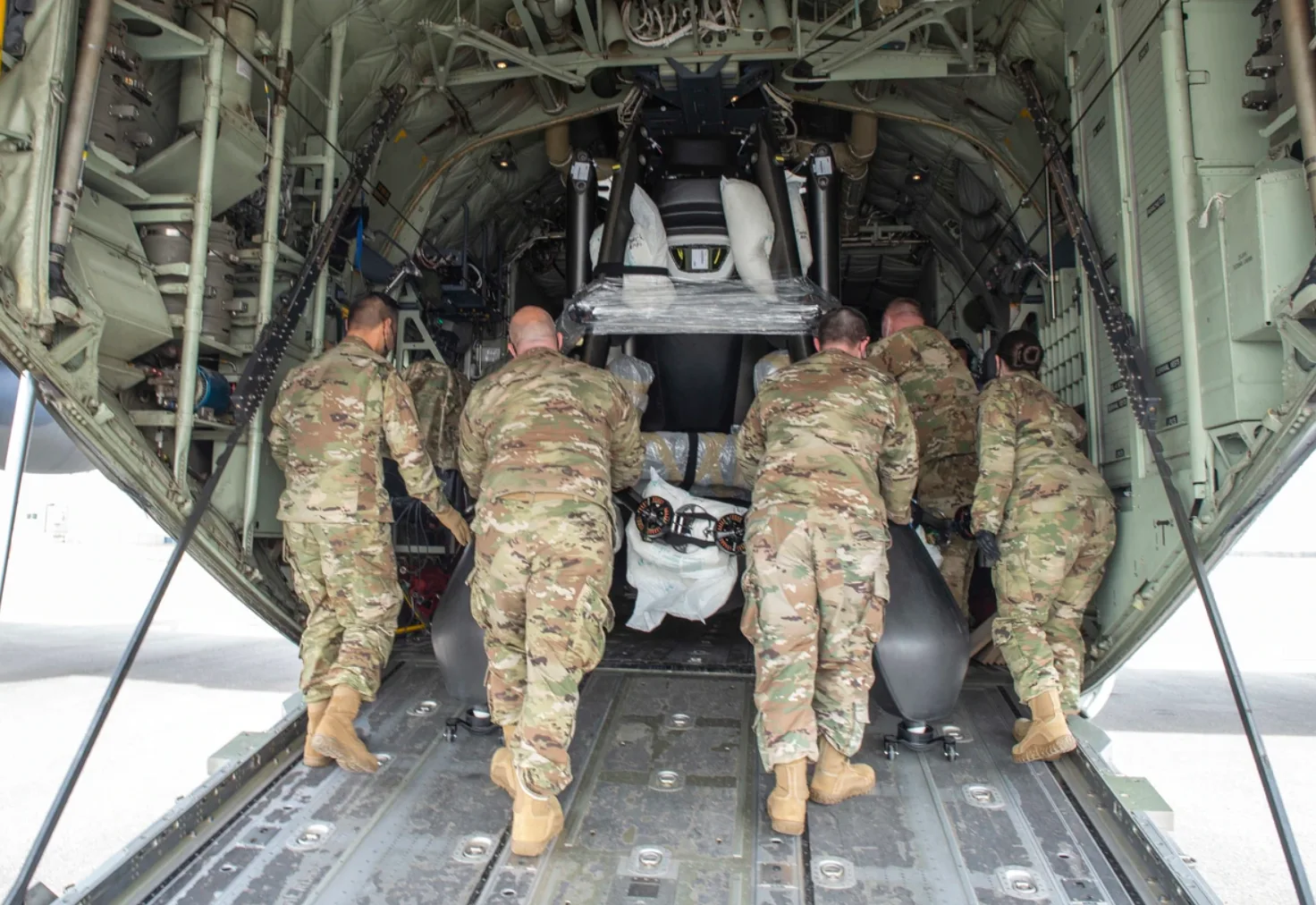
Airmen push HEXA, folded for transport, into an Air Force HC-130J for the flight from Springfield, Ohio, to Austin, March 2021.
  1. 01Air-transportableFolds to 9.6 × 7.7 × 8.2 ft to fit a C-130; the Air Force has moved it that way. Its flight configuration fits a C-5.
  2. 02Charges on JP-8Heavy-fuel generators and LIFT’s charging cases, in development, will recharge batteries on the fuel units already carry, with no grid power.
  3. 033-minute battery swapsMotors and battery packs are line-replaceable; rotating battery sets keeps an aircraft flying.
  4. 04Any climateRated for 0–120 °F, and flown in five countries, from desert heat in Saudi Arabia and the UAE to Gulf Coast humidity at Eglin AFB.

Record

With the Air Force and Army since 2019

SBIR and STTR work across the Air Force and Army, from feasibility studies to flight test as a service and an Army casualty evacuation system. The remaining work is maturation and fielding, not invention.
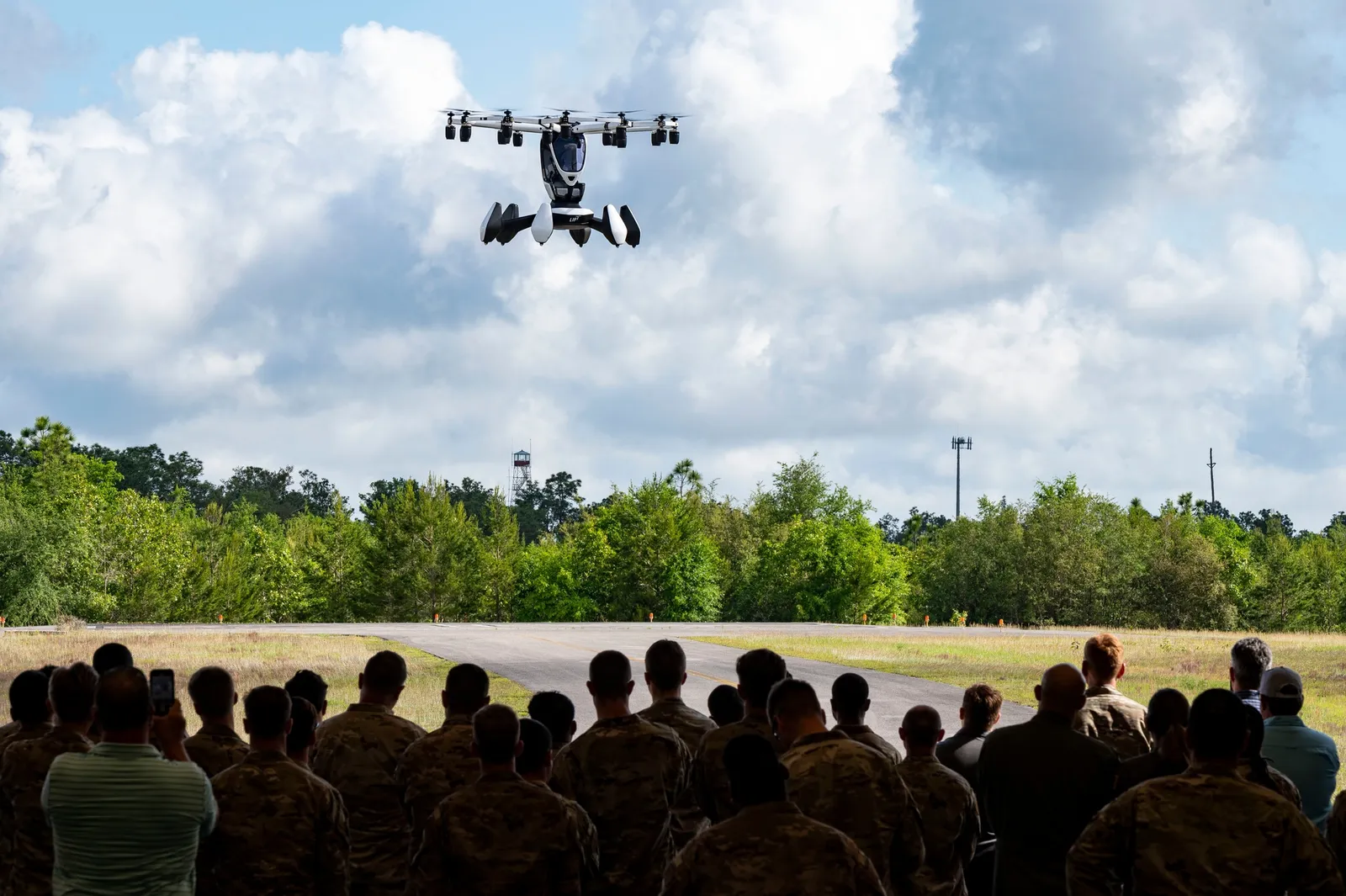
HEXA flies for Airmen at Emerald Warrior 22.1, a special operations exercise at Hurlburt Field, Florida, May 2022.
HEXA flies for Airmen at Emerald Warrior 22.1, a special operations exercise at Hurlburt Field, Florida, May 2022. U.S. Air Force photo by Staff Sgt. Taylor Crul
  1. 2019–20 · USAF Phase I (×3)FeasibilityStudies of cargo lift, MEDEVAC and computer vision for cargo identification.
  2. 2020–22 · USAF SBIR Phase II · Agility PrimeTwo aircraft deliveredOne of the first eVTOLs chosen for Agility Prime, flown for Secretary of the Air Force Barbara Barrett. Then DoD airworthiness guidelines, service-level flight tests, a ballistic parachute test and Air Force pilot training.
  3. 2022–24 · USAF SBIR Phase III · AFLCMCFlight test as a serviceTwo test lines at Eglin AFB and Duke Field, the cargo variant, remote-pilot training for Air Force cadre, and a manufacturing readiness assessment.
  4. 2022–23 · USAF STTR Phase II · with UT AustinAutonomous cargo liftHEXA searched an area, found a marked package, hoisted it from an 8 m hover and delivered it.
  5. 2024–25 · Army SBIR Direct-to-Phase II · Army Applications LabCasualty evacuation systemA modular medical pod and an autonomy system integrated on HEXA, demonstrated in May 2025 to Army, Defense Health, SOCOM, USMC and UK MOD stakeholders.

Flown by Airmen

In November 2022 Air Force pilots took the controls themselves, in HEXA’s first military-controlled flights at Eglin: the first Air Force crew trained to operate an eVTOL aircraft independently, from the 413th Flight Test Squadron, AETC Detachment 62 and AFWERX Agility Prime. With Air Education and Training Command, LIFT co-developed the training and maintenance program that lets Airmen fly and maintain HEXA.

“Getting the chance to fly the HEXA gave me a deeper understanding of the system’s inner workings and an understanding of how stable and responsive the HEXA aircraft is and of its possible future capabilities.”
Maj. Victoria Snow, pilot, 413th Flight Test Squadron
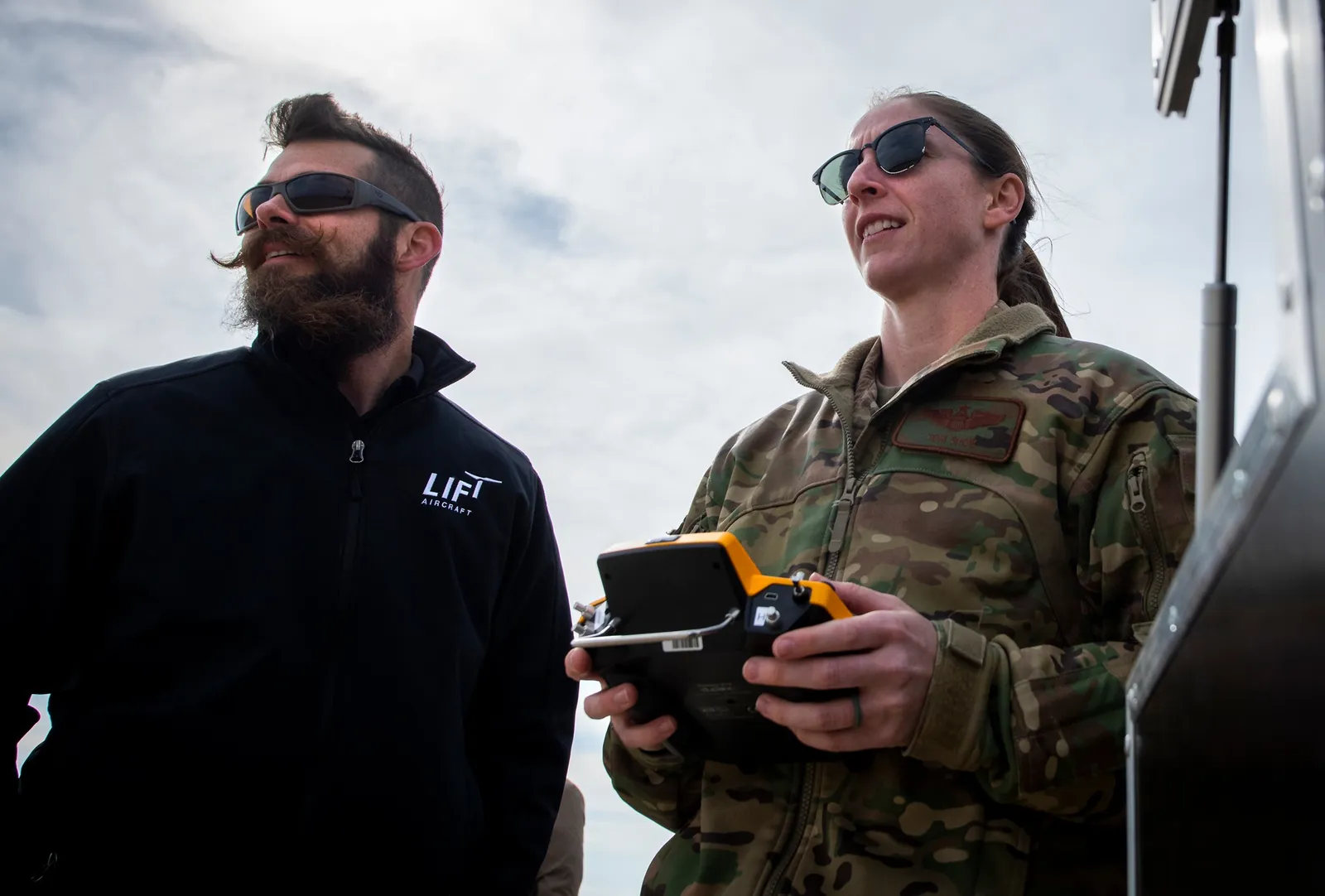
Maj. Victoria Snow, 413th Flight Test Squadron, flies HEXA by remote control beside LIFT’s Jace McCown, Eglin AFB, November 2022.
Maj. Victoria Snow, 413th Flight Test Squadron, flies HEXA by remote control beside LIFT’s Jace McCown, Eglin AFB, November 2022. U.S. Air Force photo by Samuel King Jr.
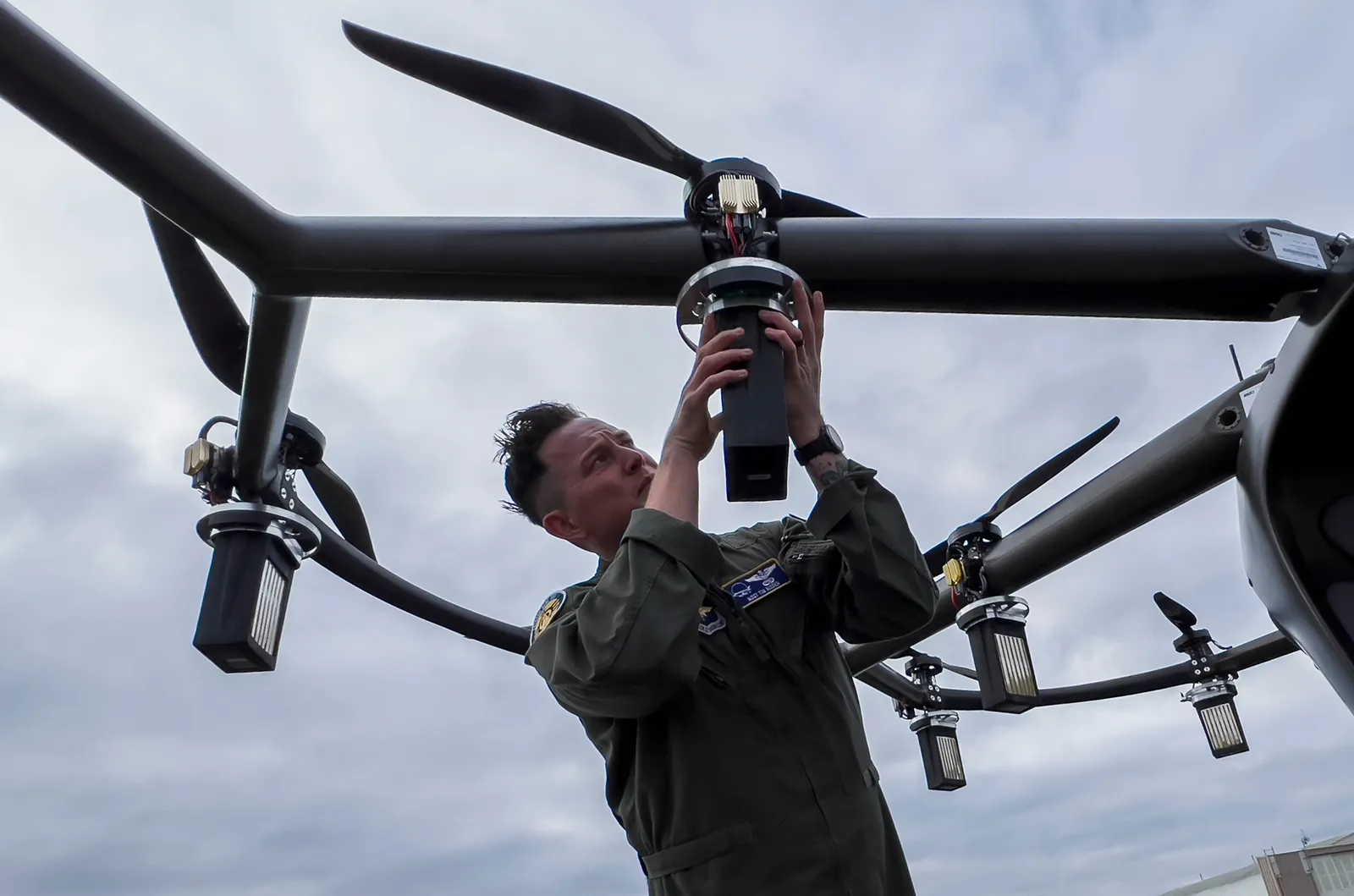
Master Sgt. Tim Nissen, AETC Detachment 62, fits a battery before a flight, Eglin AFB, November 2022.
Master Sgt. Tim Nissen, AETC Detachment 62, fits a battery before a flight, Eglin AFB, November 2022. U.S. Air Force photo by Samuel King Jr.
HEXA hovers during flight testing at Eglin AFB, July 2022.
HEXA hovers during flight testing at Eglin AFB, July 2022. U.S. Air Force photo by Samuel King Jr.

What’s next

More range, on the same airframe

  1. 01Hybrid range extenderTwin heavy-fuel generators targeted at 1–2 hours of flight, against about 15 minutes on batteries today with a 250 lb load.
  2. 02Long-range batteryDrop-in silicon-anode packs for missions that must stay all-electric and quiet, adding about 30% endurance.
  3. 03US productionLow-rate production is underway in Texas.

Put HEXA in your next exercise

HEXA is available for experimentation and demonstrations now.

Talk to our teamSee the aircraft