
3D-printed moulds
The first carbon-fiber canopy, crown and centroplane were laid up in large 3D-printed moulds, delivered in weeks instead of the months machined tooling takes.
The aircraft
A single-seat, all-electric aircraft that takes off and lands vertically, designed from the start so anyone can fly it.
Design
We started from a specific mission: short-range flights for one person. Wings would save a few minutes on trips that short, so we chose a pure, hover-optimized multirotor for maneuverability, wind resilience and redundancy. Three principles decided everything else.
Drag to turn
Explore the aircraft
42 in propellers high above the pilot. HEXA keeps flying with up to six out.
More on this ↓Each motor has its own controller and battery, away from the pilot, so one fault stays one fault.
More on this ↓Carries the rotors overhead, clear of the cockpit and people on the ground.
More on this ↓A low-altitude, autonomous whole-aircraft parachute at the top of the crown.
More on this ↓All-around visibility, fast boarding and less weight, with the pilot at the center of gravity.
More on this ↓One joystick and a tablet. Fly-by-wire handles the rest.
More on this ↓Four redundant flight computers, with GNSS and a radar altimeter.
More on this ↓Take off from and land on water as well as land.
More on this ↓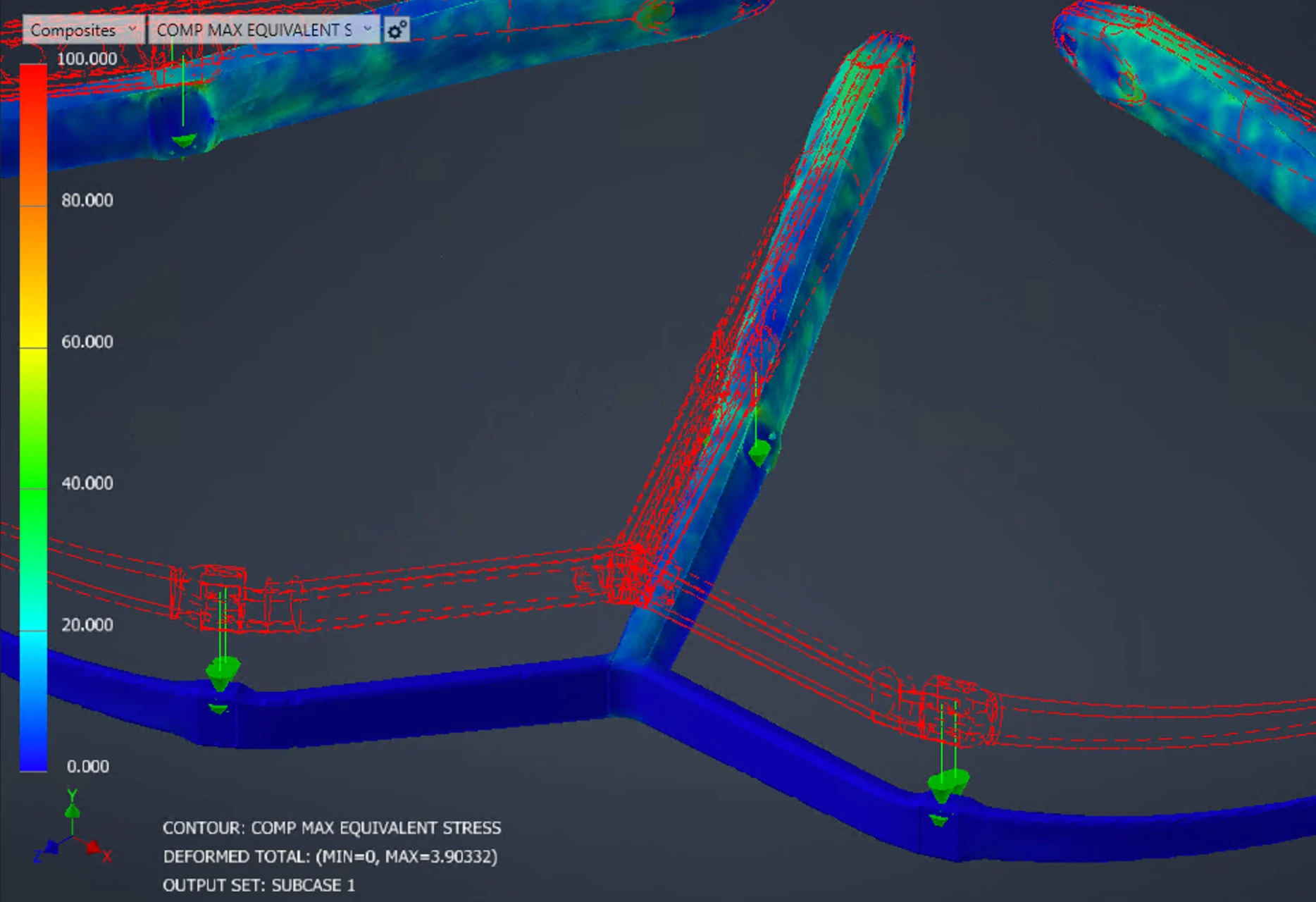
Airframe and structure
HEXA’s structure is monocoque carbon-fiber composite, where the shell itself carries the load. It’s light enough for the ultralight weight limit and strong well beyond what flight demands.
Amphibious
Floats are first a safety feature. Many of the best air mobility routes cross rivers, lakes and bays, and HEXA can set down safely on any of them. The same floats make water a normal place to take off and land, reach people where roads are cut by floods, and earn HEXA an extra 210 lb of weight allowance.
Powertrain
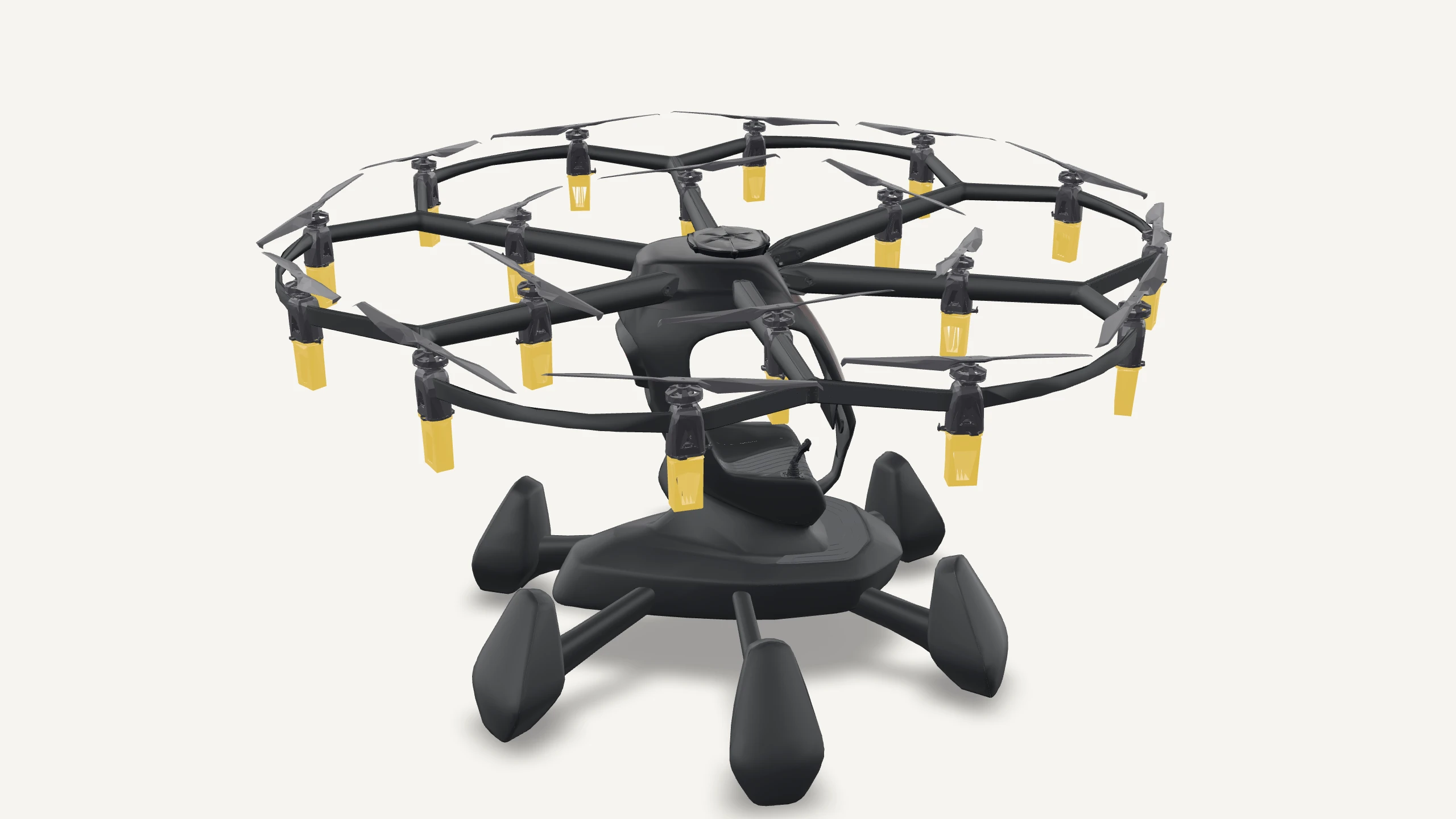
Eighteen electric motors, each with its own custom field-oriented-control (FOC) speed controller and 42-inch propeller. HEXA keeps flying with up to six motors out.
Batteries and charging
LIFT’s patented distributed battery system gives each of the 18 motors its own 0.54 kWh pack (9.7 kWh in all), mounted away from the pilot. A fault stays with one motor, and any thermal runaway is isolated.
Flight control and avionics
HEXA's 4× redundant flight control computer is designed, built and tested to aviation certification standards (DO-178C, DO-254, DO-160G). Its four computers check each other continuously and reach every motor over two CAN buses and a separate PWM backup.
Connected aircraft
Every HEXA carries triple-redundant 4G/5G cellular and Wi-Fi, with optional Starlink satellite. It syncs automatically with LIFT Ops: no cables, no manual downloads.
Parachute
HEXA is built around an autonomous ballistic parachute that brings the aircraft and pilot down together. It deploys on its own, and works from as low as 40 feet.
Cockpit
An open cockpit with a single joystick and an iPad display. The flight computer keeps HEXA stable, so the pilot only decides where to go.
Flight modes and autonomy
New pilots start in the most assisted mode and unlock more freedom as their skills grow, while Level 4 autonomy can take over the hardest parts of any flight.
Advanced manufacturing
More than 100 of HEXA’s parts are 3D printed. Additive manufacturing took us from a new design to first crewed flight in under 13 months, and keeps each new version fast to build.
The first carbon-fiber canopy, crown and centroplane were laid up in large 3D-printed moulds, delivered in weeks instead of the months machined tooling takes.
The motor mounts and crown brackets are 3D printed in titanium as certified aerospace parts. The crown’s ENDY bracket, topology-optimized for strength and weight, weighs 152 g instead of 250 g and holds the crown together through the 11.5 g shock of a parachute opening.
Specifications
*Part 103 ultralight operations are limited to 62 mph. Public aircraft operations, such as public safety agencies, are not subject to that limit.
Testing and track record
One airframe, three editions
Every HEXA shares one proven airframe and thousands of hours of flight data, so each new edition builds on the last.
The float-equipped model at LIFT flight centers. No pilot’s license required. Conformance with the FAA ultralight standard was verified by a LAMA technical standards committee.
Built for the FAA’s new MOSAIC rules: up to 90 mph and 25 minutes, with flight over congested areas and at night.
For commercial air taxi service: fully autonomous flight, IFR weather operations and flights of up to 40 minutes.
We use cookies to understand how the site is used and to measure our ads. Essential cookies are always on. Learn more